Translating a Design-Forward Vision into a New Kind of Gatlinburg Hotel
Developer - Aatmos
Creative Direction - AEP Hospitality Consulting
Branding & Identity - The Saturday Crowd
Architect - Dryden Architects
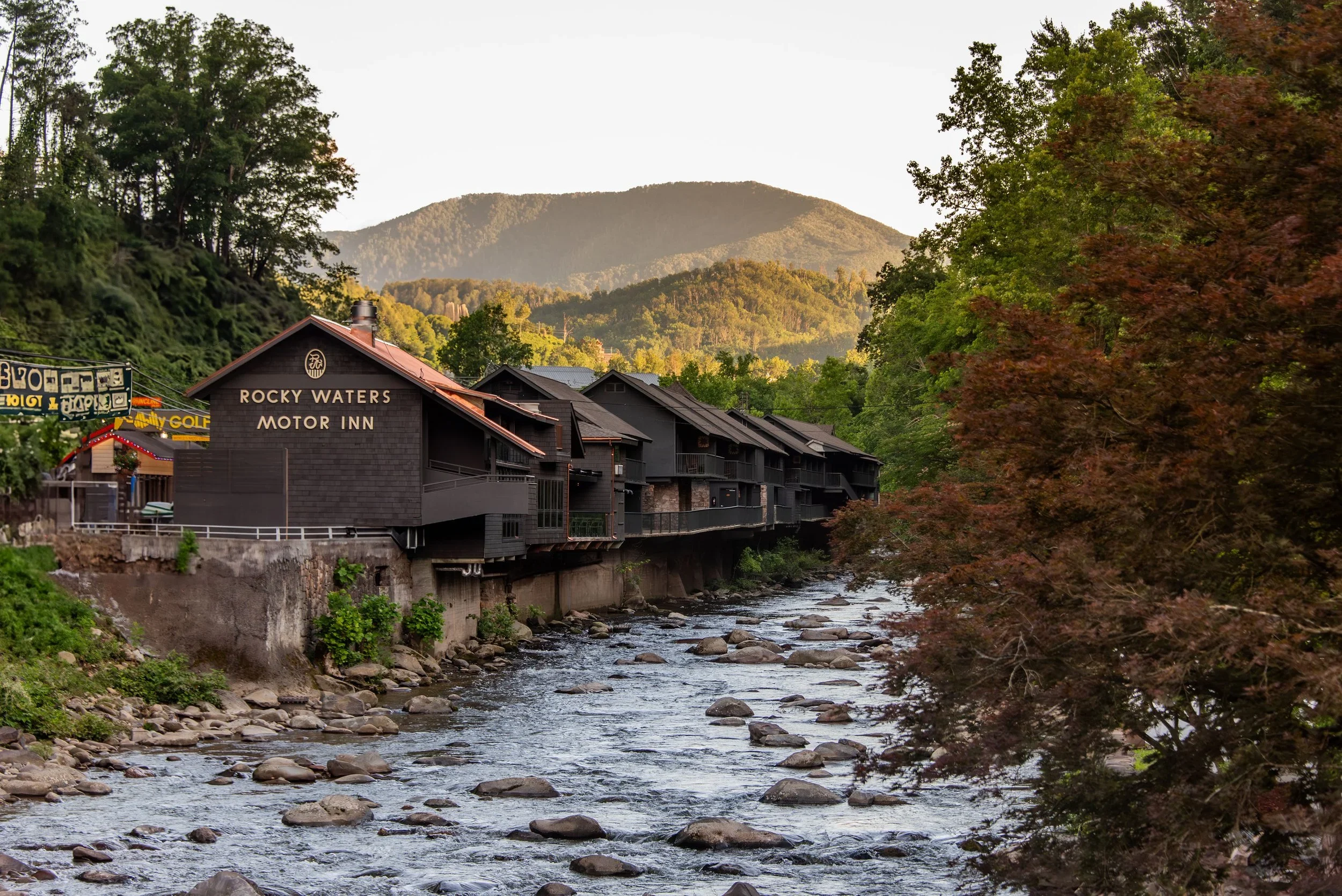
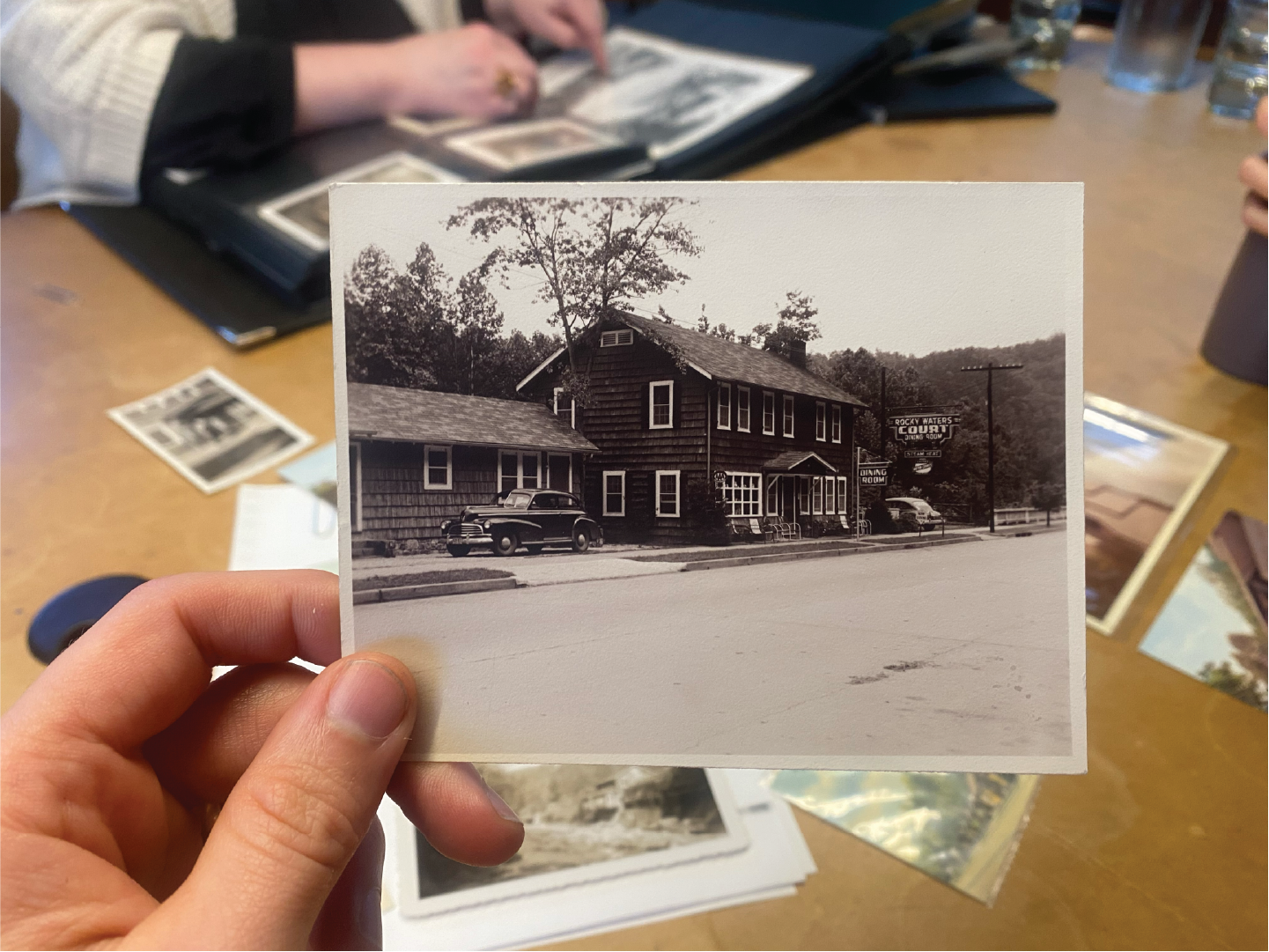
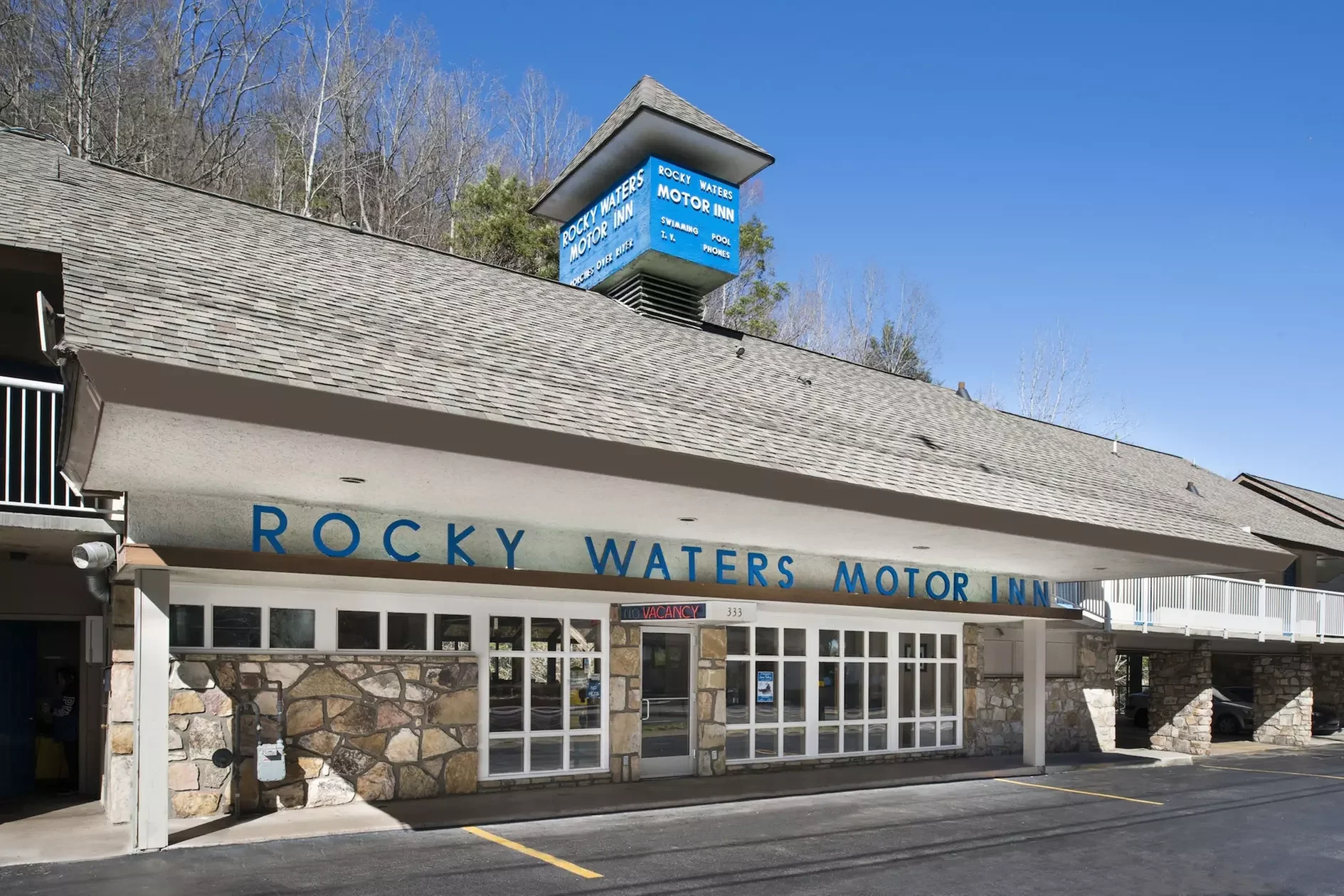
Historic Rocky Waters Motor Inn sits in a part of Gatlinburg most people in the region think they already understand. Neon, pancake houses, traffic, and nostalgic inns stacked along the parkway. The property itself has been welcoming visitors since the 1930s, first as a collection of rustic cabins and later as a family-owned roadside motel perched over the Little Pigeon River. 
When Aatmos, led by brothers Mahavir and Dev Patel, decided to transform Rocky Waters into an adults-only luxury hotel, the intention was to show guests a different side of Gatlinburg. One that foregrounds the river, the mountains, and the region’s craft and hospitality traditions instead of the usual visual noise.
By the time Radtron joined the team near the end of design development, the vision for the hotel was clear. The challenge was making sure the signage and wayfinding system would support that vision, respect the site’s history, and feel at home in a new category of Gatlinburg hospitality.
Radtron’s Role on the Project
We were engaged as a design-forward signage consultancy with three main responsibilities:
1. A comprehensive on-site survey and feasibility report, including code compliance review, circulation and sightline analysis, pedestrian and vehicular patterns, power and mounting conditions, and close coordination with other trades.
2. Translation of The Saturday Crowd’s branding into a cohesive architectural signage system for the exterior, guest experience for the interiors, and regulatory requirements.
3. Development, engineering coordination, fabrication management, and installation oversight for the full signage package.
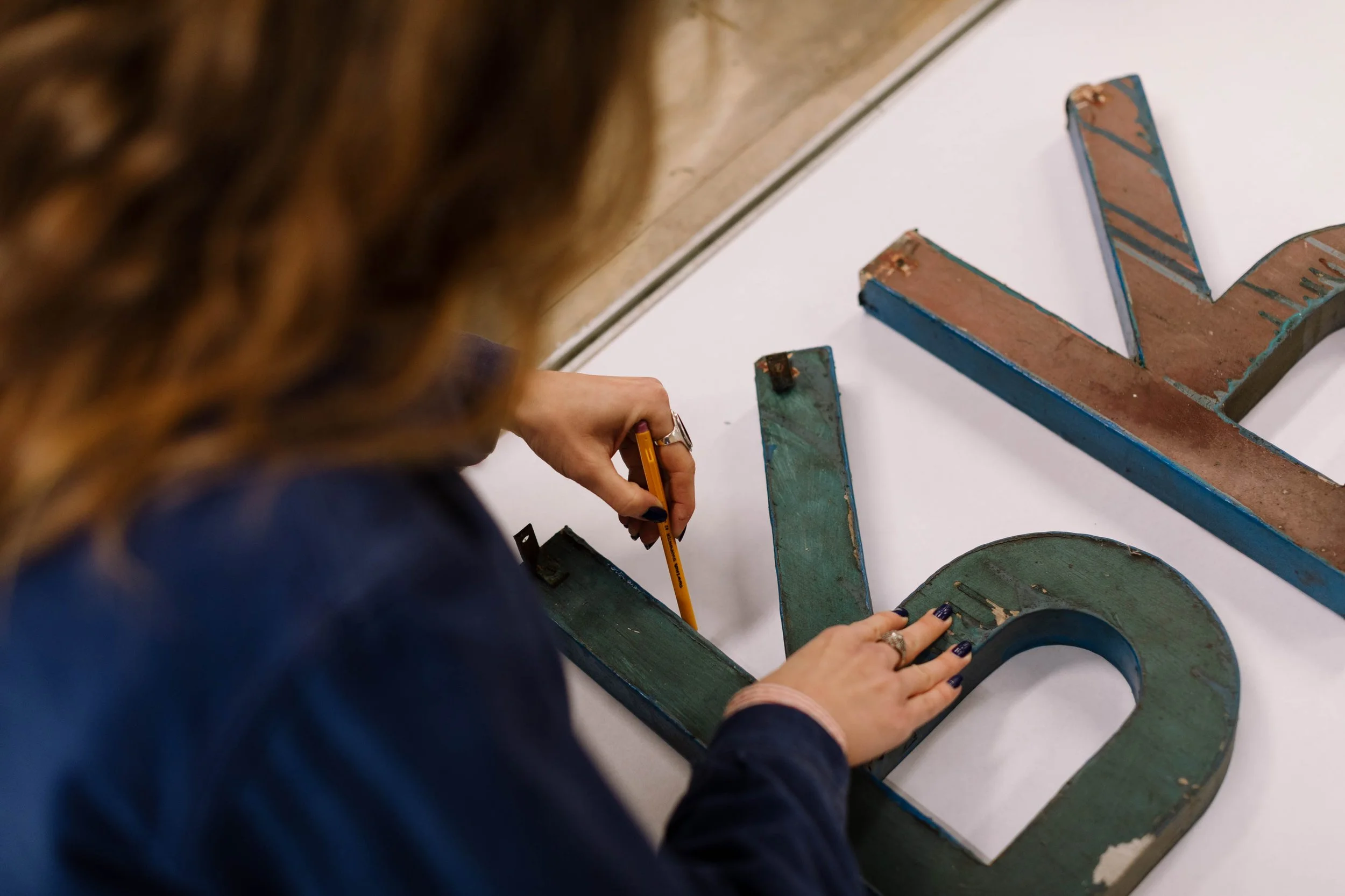
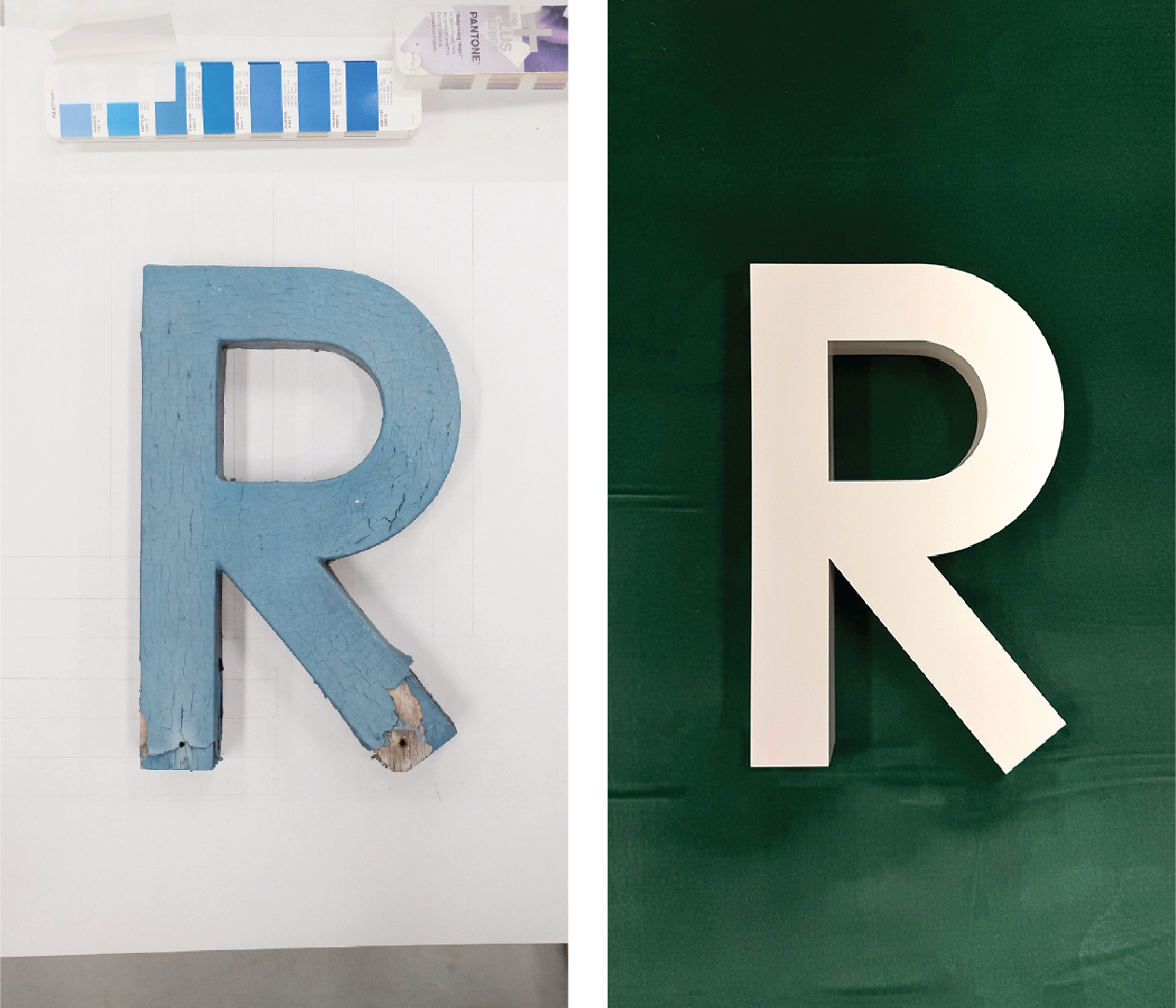
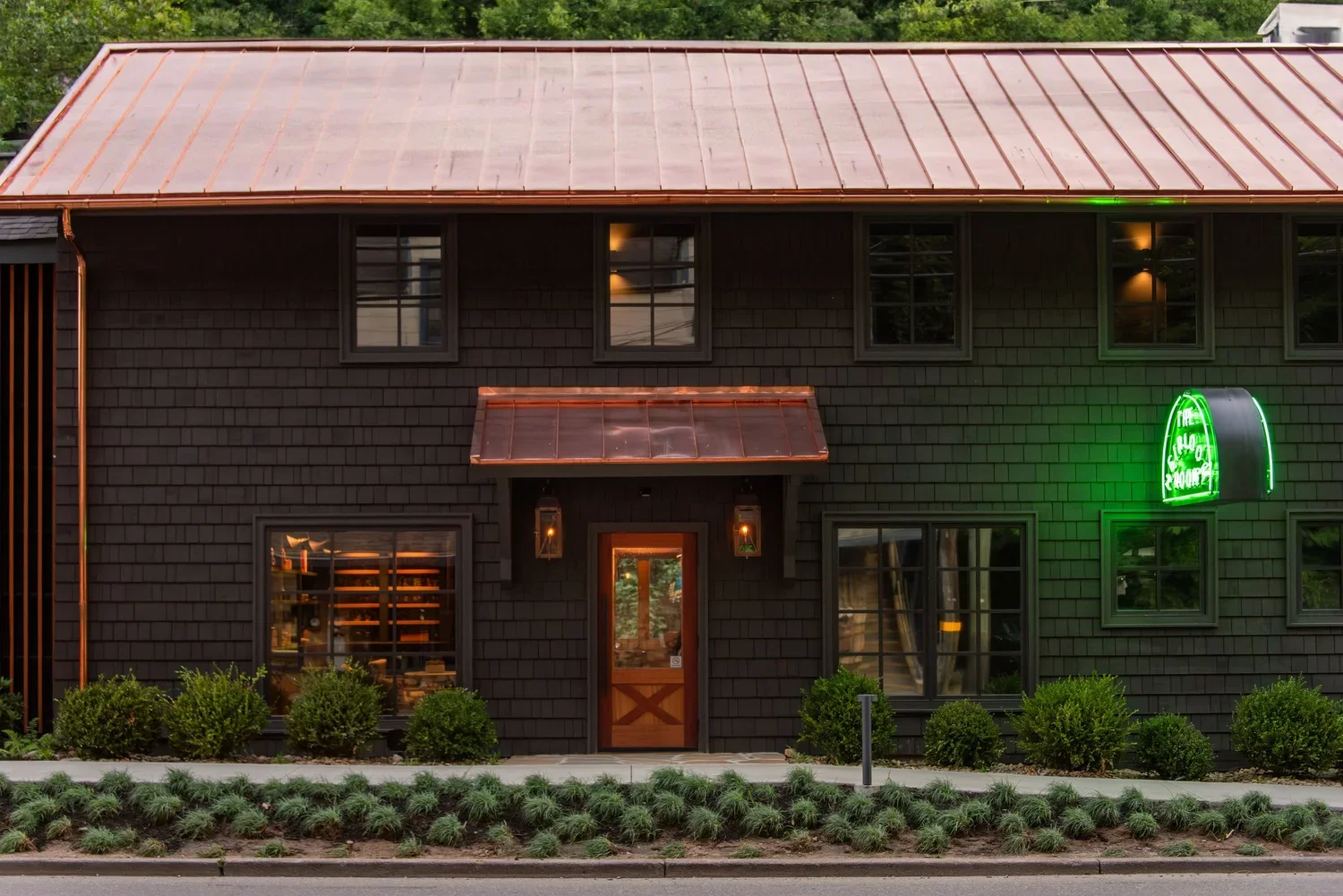
Deliverables included a handmade traditional neon hanging sign for The Heirloom Room, property-wide ADA signage and compliance validation, room numbers, parking identification, wayfinding throughout the site, and documentation of historic on-site sign elements for design reference.
We weren’t responsible for branding, interiors, architecture, or hotel operations. Our job was to make sure the brand’s character survived the trip from concept to construction and felt as considered in the parking lot as it did in the brand deck.
First-Time Independent Ownership, First-of-Its-Kind Positioning
For Aatmos, Rocky Waters was not just the next project. It was a return to a property the family knew personally and an attempt to create something Gatlinburg had not seen before: a four-star, adults-only luxury inn with a strong sense of place, listed with Small Luxury Hotels of the World and later recognized by the Michelin Guide. 
That ambition came with natural pressures. This was a first-time independent hotel redevelopment, in a market where most signage is designed to shout rather than welcome. Expectations around signage cost, lead times, and coordination effort were shaped by decades of conventional parkway projects.
In the early stages, signage risked being seen as a straightforward line item. Once we were on site and inside the drawings, it became clear that the hotel’s identity would depend on a handful of key decisions regarding scale, placement, and visibility. Those decisions were not complicated on their own, but they required someone to carry them through construction to install and beyond.
Honoring a Historic Site Without Nostalgia
The history of the property mattered deeply to ownership. The original cabins and later motor court had hosted generations of visitors long before Gatlinburg became what it is now. The new hotel needed to acknowledge that legacy without getting stuck in it.
We approached signage and wayfinding as part of that balance. The goal was not to recreate vintage motel graphics or lean into kitsch. It was to create a system that felt timeless against the long, riverside building and the surrounding landscape, while still signaling clearly that this was a different kind of experience.
That meant a restrained exterior identity, a primary wordmark that felt confident rather than loud, and wayfinding that supported the guest experience without competing with the views or interiors.
Protecting the Primary Brand Moment
One of the most important interventions happened on the north elevation, where the hotel’s feature wordmark was intended to face inbound Gatlinburg traffic. During construction, a new open vestibule element at the upper third of that wall began to shift how the building handled circulation and proportion at that end of the property.
On paper, the vestibule made sense. In person, it competed directly with the sign’s intended position and scale.
Because Radtron was on site and involved in coordination conversations, we were able to convene an all-hands discussion between ownership, design, and construction. Together, we evaluated how the wall would read from the parkway and what it would mean for the hotel’s first impression if the signage were forced into a compromised position.
The decision was to close the upper portion of the wall and return the sign to its original, intentional location. This allowed the feature wordmark to sit where it wanted to be, at the proper size, without feeling like an afterthought pinned to a leftover space.
Visibility in a Tight Urban Envelope
Rocky Waters is essentially one room deep and two city blocks long, with the primary elevation running directly along the main road. There is almost no setback. That geometry created both opportunity and constraint for signage.
Late in construction, we found that the wood slat enclosure hiding a walk-in freezer and service area near the main entry had been built several feet taller than the agreed height. From the sidewalk it felt minor. From the parkway, it would have obscured a significant portion of the primary identity for southbound drivers.
During a pre-install site visit, we flagged the issue for the owner and GC and recommended the structure be reduced to its original height. The adjustment was made in time, and the hotel retained the visibility it needed in a dense visual corridor.
These are the kinds of small, practical decisions that rarely appear in marketing photos but have a real effect on how a building is perceived.
Coordination Through the Finish Line
As the project moved toward completion, late-stage construction challenges surfaced in predictable ways. Power had not yet been run to the neon sign location. The long frontage slat wall between the hotel and the road was still being finished. The local install team needed clear guidance on mounting approaches to respect both the architecture and the brand.
Radtron’s role at that stage was to steady the process and maintain the vision with the brand’s integrity at the forefront. We worked with the GC to identify workable paths forward that kept the project aligned with the original design intent. We provided mounting recommendations and coordination support to the installation crew so the details landed cleanly despite the compressed schedule.
The goal was simple. Show up prepared, make the work easier for everyone involved, and leave the building looking like the signage had always been part of the plan.
Outcome and Ongoing Relationship
Today, historic Rocky Waters Motor Inn reads as a calm, confident counterpoint to the busier side of Gatlinburg. The exterior identity sets expectations without overpowering the landscape. Wayfinding supports an adults-only, service-forward guest experience where people can find their way without having to think about it. The overall system feels like a natural extension of the architecture and brand rather than a layer applied at the end.
The hotel has since joined the Small Luxury Hotels of the World network and received recognition in the Michelin Guide, establishing it as a first-of-its-kind luxury offering in Gatlinburg. For Aatmos and Mahavir, the project has been a resounding success, both in terms of guest response and market position. Their decision to bring Radtron back for a second hospitality project in 2026 is a testament to the working relationship we were able to establish with Mahavir and his team.
What This Means for Future Projects
Rocky Waters reinforced something we see often in design-forward hospitality work. When signage and wayfinding are treated as part of the architectural and brand conversation rather than a late-stage task, they become quiet but powerful tools for shaping how a property is experienced.
For first-time independent hotel owners and seasoned developers alike, the difference is not in how much signage is installed, but in how aligned it is with the goals of the project.
If you are navigating a hospitality or mixed-use project where brand fidelity and guest experience matter through construction, we are always open to an early conversation and would love to hear about it.